
- BEEE - Home
- BEEE - Introduction
- Basic Electrical Quantities
- Ohm's Law
- Kirchhoff's Current Law
- Kirchhoff's Voltage Law
- Types of Circuit Elements
- Series Circuit
- Parallel Circuit
- Voltage Division and Voltage Divider
- Current Division and Current Divider
- Star and Delta Connection
- Electric Power and Electrical Energy
- Effects of Electric Current
- Electrical Safety Measures
- DC Circuits and Network Theorems
- Basics of DC Circuits
- Nodal Analysis
- Mesh Analysis
- Thevenin's Theorem
- Norton's Theorem
- Superposition Theorem
- Maximum Power Transfer Theorem
- Source Transformation
- BEEE Useful Resources
- BEEE - Useful Resources
- BEEE - Discussion
Electrical Safety Measures - Fuses, Circuit Breakers, Earthing
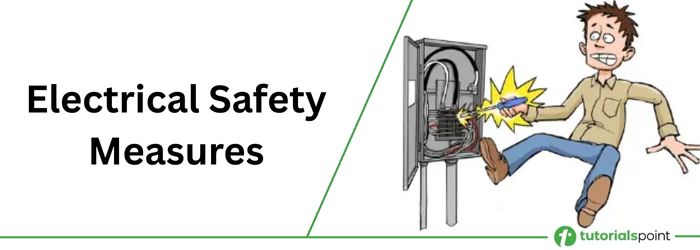
Electricity is used for powering homes, offices, hospitals, industrial facilities, and more. Electricity is the clean and most efficient form of energy. Electricity, if not handled properly, can be extremely dangerous and may cause severe consequences such as shock, burns, fires, or even death.
Electrical Safety is nothing but a set of precautions, rules, or practices that should be followed by personnel working with electricity to protect both person and equipment from electrical hazards. Read this chapter to get a good understanding of the key Electrical Safety Measures that should be taken in order to maintain user safety.
Electrical Hazards
Electrical hazards are those dangerous conditions or situations in which a person working with electricity may come into contact with it.
Some of the common examples of electrical hazards include −
- Electric shock
- Electric burn
- Electric fire
- Short-circuits
- Arc flash or blast
- Equipment damage, etc.
Why Electrical Safety Measures are Important?
Electrical safety measures are important because they help in the following −
- They prevent injuries and fatalities caused by electricity.
- They reduce electric fire accidents.
- They provide safe working conditions.
- They protect electrical equipment.
- They comply with safety standards and regulations.
Therefore, electrical safety essential in both domestic and industrial settings.
Main Causes of Electrical Accidents
Here we have listed some of the common reasons behind major electrical accidents in the real-world −
- Damaged or exposed wires
- Overloading of electrical sockets
- Not used or improper earthing or grounding of the electrical system
- Using faulty electrical equipment or appliance
- Touching electrical devices or switches with wet hands
- Ignoring timely maintenance of electrical devices or systems
- Lack of safety awareness related to electricity, etc.
Basic Electrical Safety Measures
Electrical safety measures are crucial for protection of both person from hazards and equipment from damages. Here we have explained some of the basic electrical safety measures and their effect for handling electricity safely −
Insulate Electric Wires Properly
Insulation is nothing but a coating provided over the conductor to prevent current leakage. Therefore, we always need ensure that −
- All electrical wires must have proper insulation.
- There must not be cuts or cracks in the wires.
- If wires are damaged, they must be replaced immediately.
Provide Proper Earthing/Grounding
Earthing or grounding is one of the most important electrical safety systems that grounds leakage currents and protect from electric shocks. Thus, all electrical devices having metallic body must be properly grounded. This helps in the following −
- It protects person from electric shocks.
- It reduces risks of equipment damage.
- It improves the system stability.
Use Fuses and Circuit Breakers
Fuses and Circuit Breakers are electrical protection devices that provide protection against overloads and short circuits. Electric fuse provides protection when electric current in the circuit exceeds the safe limit, while circuit breaker trips the circuit during fault conditions. Therefore, we should use these devices of correct rating in our electrical systems.
Do Not Overload Electrical Sockets
It is very common practice that we plug multiple devices into a single circuit. This can cause a severe electrical accident because it overloads the socket. It can result into overheating and electric fire in the socket.
Therefore, we should follow the practices given below −
- We should use power strips with overload protection.
- We should avoid using multiple devices on a single socket.
Keep Electricity Away from Water
As water reduces the electrical resistance and increases the risk of electric shock. Hence, while working electricity or electrical appliances, we should follow the below practices −
- We should not touch switches and metallic bodies of devices with wet hands.
- We should keep electrical appliances away from water and wet areas.
- We should use proper waterproofing near electrical fittings.
Regularly Inspect and Maintain Electrical Systems
To avoid any electricity related consequences, we should regularly inspect electrical systems to detect problems early. Hence, we should perform the following preventive maintenance −
- We should check the wiring conditions periodically.
- We should replace old and damaged components immediately.
- We should ensure proper tightening of connections, etc.
PPE Kit for Electrical Safety
PPE stands for Personal Protective Equipment. A PPE kit helps persons working with electricity to safeguard themselves from electrical hazards.
A PPE kit includes the following devices −
- Safety helmet
- Face shields
- Insulated gloves
- Rubber soled shoes
- Flame-resistant clothing
Electrical Fire Safety Measures
Electrical faults like short-circuits or overcurrent are common causes of electric fires. To prevent electric fires or reduce their severity, we should follow these practices −
- We should rectify loose connections
- Use proper wiring as per standards
- Install smoke detectors
- Never use water on electric fires
- Use proper fire extinguishers like CO2 and dry powered based.
First Aid for Electric Shock
There may be sometime when one can get an electric shock, in that case, we should follow these guidelines to provide first aid to him −
- Do not touch the person directly, otherwise you could also get an electric shock.
- Switch off the main power supply immediately.
- Use a non-conductive/insulated object like wooden/plastic stick to isolate the person from the source of electric shock.
- Call emergency services
- Provide CPR if required.
Conclusion
In conclusion, electrical safety measures are very important to prevent electricity related consequences such as electrical accidents, injuries, and equipment damages. In this chapter, we have discussed electrical safety measures in detail.
