- Advanced Android - Home
- Advanced Android - Material Design
- Advanced Android - Sliding Menu
- Advanced Android - Tabs
- Advanced Android - Sliders
- Advanced Android - Floating Labels
- Advanced Android - ViewPager
- Material Login & Registration
- Advanced Android - Snackbar
- Expandable List View
- Search Functionality
- Count Down Functionality
- Draw Spritesheet
- Advanced Android - Linkify Class
- Advanced Android - ViewFlipper
- Advanced Android - loader
- Advanced Android - Slider Menu
- SwipeRefreshLayout
- Shake to Refresh
- Advanced Android - Color Palette
- Crumbling Layout
- Advanced Android - Page Flip
- Ken Burns effect
- Advanced Android - Parallax Header
- Borderless Dialog
- Advanced Android - Holder View
- Scrolling TextView by Ticker
- Floating Action Menu
- Spinner Data from Database
- Advanced Android - Flexbox Layout
- Advanced Android - YouTube API
- Video Streaming
- Cardview & Recycleview
Spinner Data from Database
This is an example of simple label management module is explained where you can insert new label into SQLite database and spinner will fetch with the set labels from database.
Example
This example demostrate about how to integrate Android Spinner Data from Database.
Step 1 − Create a new project in Android Studio, go to File ⇒ New Project and fill all required details to create a new project.
Step 2 − Add the following code to res/layout/activity_main.xml.
<?xml version = "1.0" encoding = "utf-8"?>
<LinearLayout xmlns:android = "http://schemas.android.com/apk/res/android"
   android:layout_width = "fill_parent"
   android:layout_height = "fill_parent"
   android:orientation = "vertical" >
   <TextView
      android:layout_width = "fill_parent"
      android:layout_height = "wrap_content"
      android:text = "Add New Label"
      android:padding = "8dip" />
   <EditText android:id = "@+id/input_label"
      android:layout_width = "fill_parent"
      android:layout_height = "wrap_content"
      android:layout_marginLeft = "8dip"
      android:layout_marginRight = "8dip"/>
   <Button android:id = "@+id/btn_add"
      android:layout_width = "wrap_content"
      android:layout_height = "wrap_content"
      android:text = "Add Label"
      android:layout_marginLeft = "8dip"
      android:layout_marginTop = "8dip"/>
   <TextView
      android:layout_width = "fill_parent"
      android:layout_height = "wrap_content"
      android:text = "Select Label"
      android:padding = "8dip" />
   <Spinner
      android:id = "@+id/spinner"
      android:layout_width = "fill_parent"
      android:layout_height = "wrap_content"
      android:layout_marginTop = "20dip"
      android:layout_marginLeft = "8dip"
      android:layout_marginRight = "8dip" />
</LinearLayout>
Step 3 − Add the following code to src/MainActivity.java
package myapplication.example.com.myapplication;

import java.util.List;

import android.app.Activity;
import android.content.Context;
import android.os.Bundle;
import android.view.View;
import android.view.inputmethod.InputMethodManager;
import android.widget.AdapterView;
import android.widget.AdapterView.OnItemSelectedListener;
import android.widget.ArrayAdapter;
import android.widget.Button;
import android.widget.EditText;
import android.widget.Spinner;
import android.widget.Toast;

public class MainActivity extends Activity implements OnItemSelectedListener {
   Spinner spinner;
   Button btnAdd;
   EditText inputLabel;

   @Override
   public void onCreate(Bundle savedInstanceState) {
      super.onCreate(savedInstanceState);
      setContentView(R.layout.activity_main);

      spinner = (Spinner) findViewById(R.id.spinner);
      btnAdd = (Button) findViewById(R.id.btn_add);
      inputLabel = (EditText) findViewById(R.id.input_label);
      spinner.setOnItemSelectedListener(this);
      loadSpinnerData();

      btnAdd.setOnClickListener(new View.OnClickListener() {
         @Override
         public void onClick(View arg0) {
            String label = inputLabel.getText().toString();

            if (label.trim().length() > 0) {
               DatabaseHandler db = new DatabaseHandler(getApplicationContext());
               db.insertLabel(label);
               inputLabel.setText("");
               InputMethodManager imm = (InputMethodManager) getSystemService(
                  Context.INPUT_METHOD_SERVICE);

               imm.hideSoftInputFromWindow(inputLabel.getWindowToken(), 0);
               loadSpinnerData();
            } else {
               Toast.makeText(getApplicationContext(), "Please enter label name",
                  Toast.LENGTH_SHORT).show();
            }
         }
      });
   }

   private void loadSpinnerData() {
      DatabaseHandler db = new DatabaseHandler(getApplicationContext());
      List<String> lables = db.getAllLabels();
      ArrayAdapter<String> dataAdapter = new ArrayAdapter<String>(this,
         android.R.layout.simple_spinner_item, lables);

      dataAdapter.setDropDownViewResource(android.R.layout.simple_spinner_dropdown_item);
      spinner.setAdapter(dataAdapter);
   }

   @Override
   public void onItemSelected(AdapterView<?> parent, View view, int position, long id) {
      String label = parent.getItemAtPosition(position).toString();
      Toast.makeText(parent.getContext(), "You selected: " + label,
         Toast.LENGTH_LONG).show();
   }

   @Override
   public void onNothingSelected(AdapterView<?> arg0) {
   }
}
Step 4 − Add the following code to src/DatabaseHandler.java
package myapplication.example.com.myapplication;

import java.util.ArrayList;
import java.util.List;

import android.content.ContentValues;
import android.content.Context;
import android.database.Cursor;
import android.database.sqlite.SQLiteDatabase;
import android.database.sqlite.SQLiteOpenHelper;

public class DatabaseHandler extends SQLiteOpenHelper {
   private static final int DATABASE_VERSION = 1;
   private static final String DATABASE_NAME = "spinnerExample";
   private static final String TABLE_LABELS = "labels";
   private static final String KEY_ID = "id";
   private static final String KEY_NAME = "name";

   public DatabaseHandler(Context context) {
      super(context, DATABASE_NAME, null, DATABASE_VERSION);
   }

   @Override
   public void onCreate(SQLiteDatabase db) {
      String CREATE_CATEGORIES_TABLE = "CREATE TABLE " + TABLE_LABELS + "("
         + KEY_ID + " INTEGER PRIMARY KEY," + KEY_NAME + " TEXT)";
         db.execSQL(CREATE_CATEGORIES_TABLE);
   }

   @Override
   public void onUpgrade(SQLiteDatabase db, int oldVersion, int newVersion) {
      db.execSQL("DROP TABLE IF EXISTS " + TABLE_LABELS);
      onCreate(db);
   }

   public void insertLabel(String label){
      SQLiteDatabase db = this.getWritableDatabase();
      ContentValues values = new ContentValues();
      values.put(KEY_NAME, label);
      db.insert(TABLE_LABELS, null, values);
      db.close(); // Closing database connection
   }

   public List<String> getAllLabels(){
      List<String> labels = new ArrayList<String>();
      String selectQuery = "SELECT  * FROM " + TABLE_LABELS;
      SQLiteDatabase db = this.getReadableDatabase();
      Cursor cursor = db.rawQuery(selectQuery, null);

      if (cursor.moveToFirst()) {
         do {
            labels.add(cursor.getString(1));
         } while (cursor.moveToNext());
      }
      cursor.close();
      db.close();
      return labels;
   }
}
Step 5 − Add the following code to manifest.xml
<?xml version = "1.0" encoding = "utf-8"?>
<manifest xmlns:android = "http://schemas.android.com/apk/res/android"
   package = "myapplication.example.com.myapplication">
   <application
      android:allowBackup = "true"
      android:icon = "@mipmap/ic_launcher"
      android:label = "@string/app_name"
      android:supportsRtl = "true"
      android:theme = "@style/AppTheme">
      <activity android:name = ".MainActivity">
         <intent-filter>
            <action android:name = "android.intent.action.MAIN" />
            <category android:name = "android.intent.category.LAUNCHER" />
         </intent-filter>
      </activity>

   </application>
</manifest>
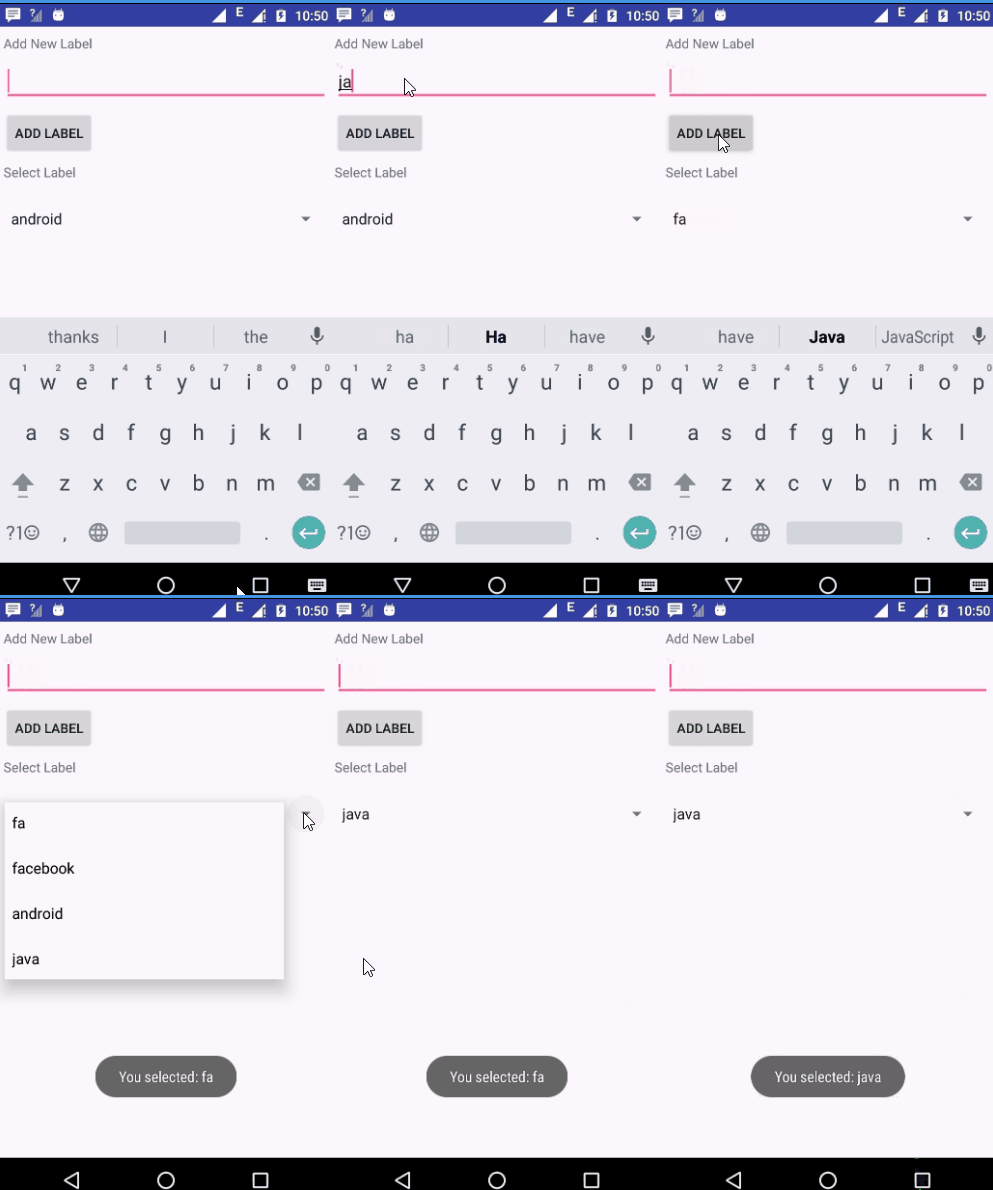
Let's try to run your application. I assume you have connected your actual Android Mobile device with your computer. To run the app from android studio, open one of your project's activity files and click Run  icon from the toolbar. Select your mobile device as an option and then check your mobile device which will display your default screen −