
- Pygame - Home
- Pygame - Overview
- Pygame - Hello World
- Pygame - Display modes
- Pygame - Locals module
- Pygame - Color object
- Pygame - Event objects
- Pygame - Keyboard events
- Pygame - Mouse events
- Pygame - Drawing shapes
- Pygame - Loading image
- Pygame - Displaying Text in Window
- Pygame - Moving an image
- Pygame - Moving with Numeric pad keys
- Pygame - Moving with mouse
- Pygame - Moving Rectangular objects
- Pygame - Use Text as Buttons
- Pygame - Transforming Images
- Pygame - Sound objects
- Pygame - Mixer channels
- Pygame - Playing music
- Pygame - Playing Movie
- Pygame - Using Camera module
- Pygame - Load cursor
- Pygame - Access CDROM
- Pygame - The Sprite Module
- Pygame - PyOpenGL
- Pygame - Errors and Exception
Pygame Useful Resources
Selected Reading
PyGame - Locals Module
This module contains definitions of various constants used frequently in a Pygame application. Although, these constants are defined in respective modules, it becomes easier to use them from locals module.
For example, Key or Mouse events (such as KEYDOWN or MOUSEBUTTONDOWN) are defined as pygame.key.KEYDOWN or pygame.mouse.MOUSEBUTTON respectively, these constants can be used without qualifying the module name by importing from locals module.
Here, we are using QUIT event from locals module.
Example - Quit Event Usage
main.py
import pygame,sys
from pygame.locals import *

pygame.init()

canvas=pygame.display.set_mode((400,300))
pygame.display.set_caption("Hello")
canvas.fill((0,0,0))
while True:
   for event in pygame.event.get():
      if(event.type == QUIT):
         pygame.quit()
            sys.exit(1)
Output
Save above script as main.py and run to get following output −
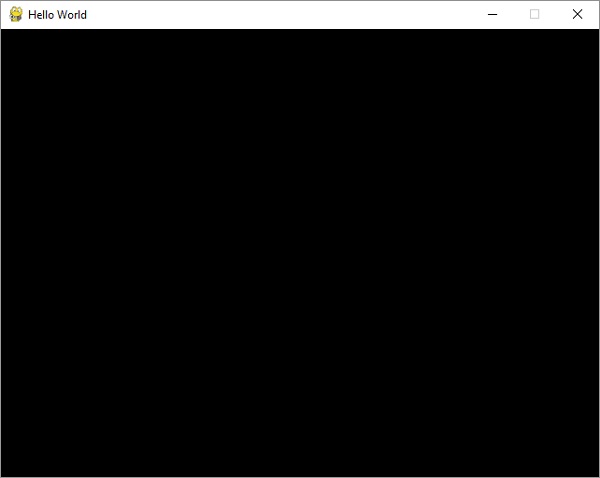
This window will be closed only if the close (X) button is clicked.

Advertisements