
- Java Microservices Tutorial
- Java Microservices - Home
- Microservices - Introduction
- Microservices vs Monolith vs SOA
- Java Microservices - Environment Setup
- Java Microservices - Advantages of Spring Boot
- Java Microservices - Design Patterns
- Java Microservices - Domain Driven Design
- Java Microservices - Decomposition by Business Capability
- Java Microservices - Decomposition by Subdomain
- Java Microservices - Backend for Frontend
- Java Microservices - The Strangler Pattern
- Java Microservices - Synchronous Communication
- Java Microservices - Asynchronous Communication
- Java Microservices - Saga Pattern
- Java Microservices - Centralized Logging (ELK Stack)
- Java Microservices - Event Sourcing
- Java Microservices - CQRS Pattern
- Java Microservices - Sidecar Pattern
- Java Microservices - Service Mesh Pattern
- Java Microservices - Circuit Breaker Pattern
- Java Microservices - Distributed Tracing
- Java Microservices - Control Loop Pattern
- Java Microservices - Database Per Service
- Java Microservices - Bulkhead Pattern
- Java Microservices - Health Check API
- Java Microservices - Retry Pattern
- Java Microservices - Fallback Pattern
- Java Microservices Useful Resources
- Java Microservices Quick Guide
- Java Microservices Useful Resources
- Java Microservices Discussion
Microservices - Introduction
In today's fast-paced digital world, businesses demand agility, scalability, and resilience from their software applications. Traditional monolithic architectures, where all components are tightly integrated, often struggle to meet these demands. Enter Microservices - a revolutionary architectural approach that structures applications as a collection of small, independent services, each responsible for a specific business function. This article explores what microservices are, their key characteristics, benefits, challenges, and real-world applications.
What are Microservices?
Microservices, or microservice architecture, is a software design pattern where an application is broken down into multiple loosely coupled, independently deployable services. Each service −
Focuses on a single business capability (e.g., user authentication, payment processing, order management).
Runs in its own process and communicates via APIs (typically REST, gRPC, or message brokers like Kafka).
Can use different programming languages and databases, allowing teams to choose the best tech stack for each service.
Unlike monolithic applications, where a single failure can crash the entire system, microservices isolate faults, ensuring that one service's failure doesn’t disrupt others.
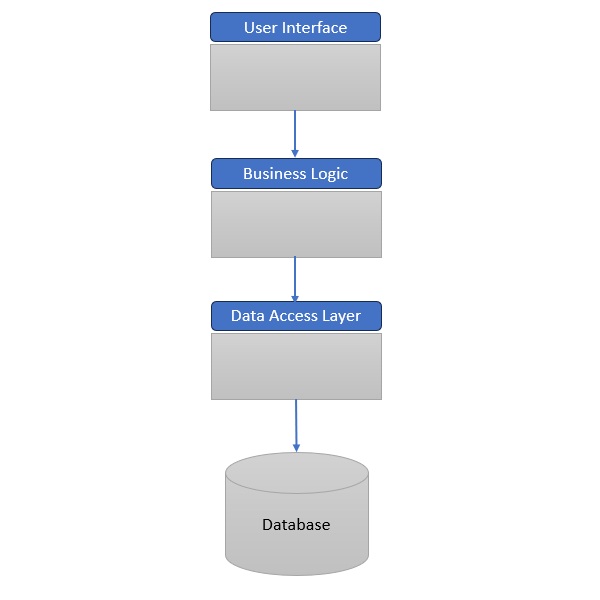
Example: Monolithic/Traditional Application Architecture
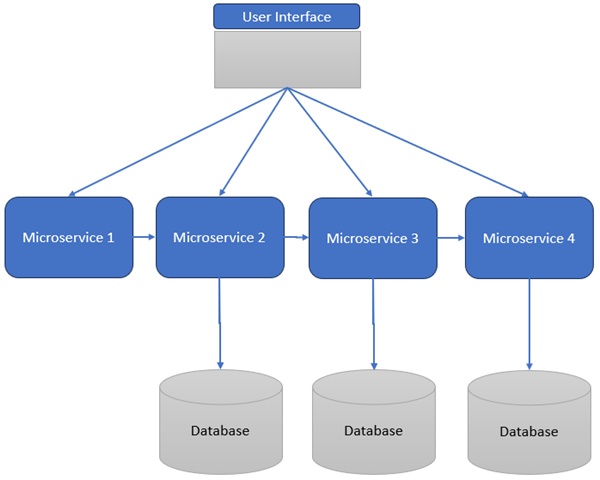
Example: Microservices Architecture
Benefits of Microservices
Faster Development & Deployment
Teams can work in parallel on different services, accelerating release cycles.
Improved Fault Isolation
A crash in one service (e.g., recommendation engine) doesn’t bring down the entire app.
Technology Flexibility
Developers can use Python for machine learning services while using Go for high-performance APIs.
Easier Maintenance
Updating a single service is simpler than redeploying a monolithic app.
Better Scalability
Only high-demand services (e.g., checkout) need scaling, optimizing resource usage.
Challenges of Microservices
Increased Complexity
Managing multiple services, databases, and inter-service communication requires robust DevOps practices.
Testing & Debugging Difficulties
End-to-end testing is harder due to distributed dependencies.
Higher Operational Overhead
Requires advanced monitoring (e.g., Prometheus, Grafana) and orchestration tools (e.g., Kubernetes).
Real-World Applications
E-Commerce (Shopee, Amazon) −
Shopee uses microservices for payments, inventory, and delivery, allowing seamless scaling during sales events.
Amazon's transition from a monolith to microservices enabled faster feature rollouts (e.g., AWS, Prime Video).
Streaming Services (Spotify) −
Spotify's microservices handle playlists, recommendations, and podcasts independently, improving performance.
IoT & Smart Devices −
Microservices manage sensor data, analytics, and device control in IoT ecosystems (e.g., smart homes, connected cars).
FinTech (Banking & Payments) −
Banks use microservices for fraud detection, transactions, and customer profiles, ensuring high availability.
When to Use Microservices?
Microservices are ideal for −
Large, complex applications (e.g., enterprise SaaS, global e-commerce).
Teams needing agility (e.g., startups scaling rapidly).
Systems requiring high availability (e.g., financial services, IoT).
However, monoliths may still be better for small projects with limited scalability needs.
Conclusion
Microservices have become the "home" of modern software architecture, offering unparalleled flexibility, scalability, and resilience. While they introduce complexity, their benefits-faster development, fault isolation, and tech diversity-make them indispensable for businesses aiming to thrive in a digital-first world. Whether you're building the next Spotify or a smart home IoT system, microservices provide the foundation for innovation.
