
Article Categories
- All Categories
-
 Data Structure
-
 Networking
-
 RDBMS
RDBMS
-
 Operating System
-
 Java
Java
-
 MS Excel
-
 iOS
iOS
-
 HTML
HTML
-
 CSS
CSS
-
 Android
-
 Python
-
 C Programming
-
 C++
C++
-
 C#
C#
-
 MongoDB
-
 MySQL
MySQL
-
 Javascript
-
 PHP
PHP
-
 Economics & Finance
Executing an inner join over RFC on database tables in SAP system
You can execute inner joins over RFC on database tables in SAP systems using several approaches. You can do this by creating your own function module that can perform selection as per the requirement.
Methods to Perform Inner Joins
Method 1: Custom Function Module
Create a custom function module in SE80 or SE37 that performs the inner join logic and returns the required dataset. This approach gives you full control over the join operations and performance optimization.
FUNCTION Z_CUSTOM_INNER_JOIN.
  SELECT a.field1, b.field2
    FROM table1 AS a
    INNER JOIN table2 AS b
    ON a.key_field = b.key_field
    INTO TABLE lt_result
    WHERE a.condition = p_value.
ENDFUNCTION.
Method 2: Database View with RFC_READ_TABLE
You could also create a database view using SE11 and that can be used to call RFC_READ_TABLE. This method leverages existing SAP functionality while providing join capabilities ?
- Create a database view in SE11 with the required tables and join conditions
- Use RFC_READ_TABLE to access the view remotely
- Apply additional filters through the OPTIONS parameter
Method 3: Third-Party SAP Connectors
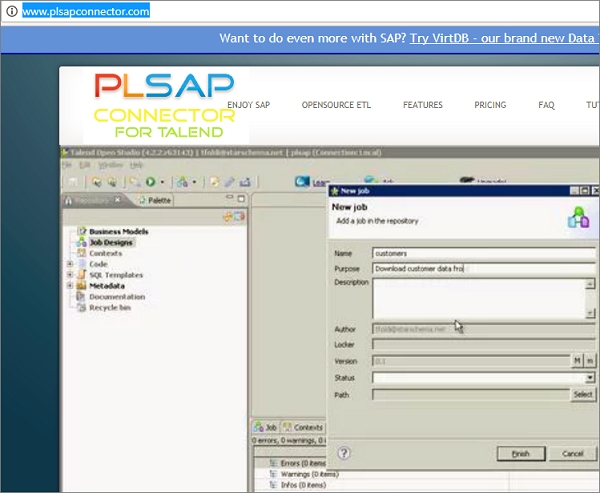
Also, check for prebuilt SAP connectors provided by companies for SQL joins. Many vendors offer specialized connectors that support complex join operations over RFC connections.
Best Practices
When implementing inner joins over RFC, consider the following ?
- Use appropriate indexes on join fields for better performance
- Limit the result set using WHERE clauses to reduce network traffic
- Test with small datasets before implementing in production
Conclusion
Executing inner joins over RFC in SAP can be achieved through custom function modules, database views with RFC_READ_TABLE, or third-party connectors, each offering different levels of flexibility and performance optimization.

747 Views
