
Article Categories
- All Categories
-
 Data Structure
-
 Networking
-
 RDBMS
RDBMS
-
 Operating System
-
 Java
Java
-
 MS Excel
-
 iOS
iOS
-
 HTML
HTML
-
 CSS
CSS
-
 Android
-
 Python
-
 C Programming
-
 C++
C++
-
 C#
C#
-
 MongoDB
-
 MySQL
MySQL
-
 Javascript
-
 PHP
PHP
-
 Economics & Finance
Is it necessary for mechanical engineers to know Python?
We shall explore whether Python knowledge is necessary for mechanical engineers and examine Python's applications in modern mechanical engineering practice.
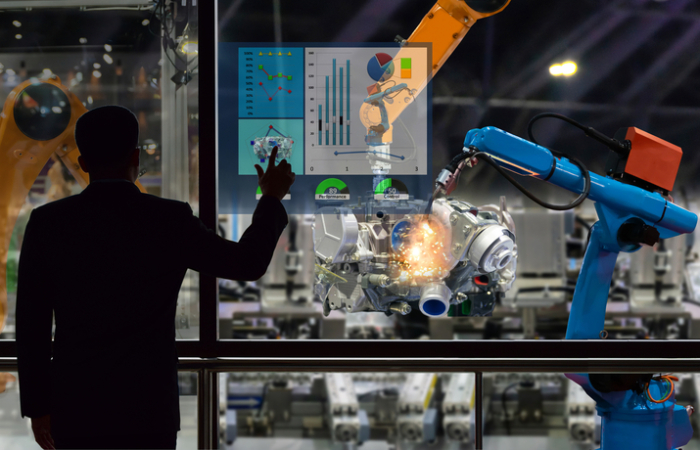
Many people assume mechanical engineering has nothing to do with programming. However, as we advance toward electric vehicles, autonomous systems, and industrial automation, the next generation of mechanical engineers must integrate traditional engineering concepts with programming languages to simulate and automate solutions efficiently.
Python is a highly accessible and powerful programming language that can solve complex problems in seconds. Its versatility makes it invaluable for mechanical and automotive engineers across various applications.
Python Applications in Mechanical Engineering
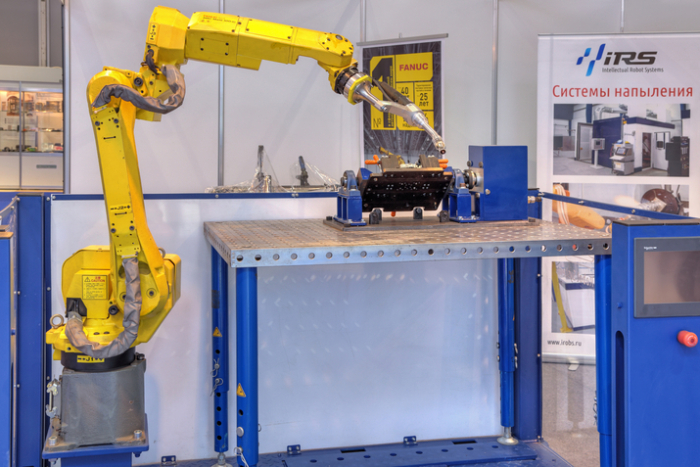
The following are the major areas where Python is used in mechanical engineering ?
Numerical Analysis
Python excels at numerical analysis tasks that would be timeconsuming to solve analytically. Mechanical engineering problems often involve linear equations, ODEs/PDEs, and complex boundary conditions that are difficult to solve by hand.
Consider calculating pressure differences across a pipe with fluid flow. Manual calculations would be timeconsuming and prone to errors. Programming languages provide graphical simulations and rapid problemsolving capabilities.
Engineers with numerical analysis and coding skills find opportunities in manufacturing, automotive, energy sectors, and even thermal engineering roles at software companies. Companies like Google and Facebook hire mechanical engineers to maintain optimal temperatures for their data centers and server clusters.
These engineers write Python or MATLAB scripts and integrate them with CFD software to evaluate different designs. Google's engineering philosophy reflects this: "Python where we can, C++ where we must."
Thermodynamics
Python efficiently solves traditional thermodynamics problems, from chemical kinetics to fluid dynamics. Instead of spending 60% of your time on manual calculations, you can use Python to solve these problems in 20% of the time and focus on core project objectives.

Python's extensive libraries and userfriendly syntax make complex thermodynamic problems manageable with relatively simple code implementations.
Computational Fluid Dynamics (CFD)
Python excels in CFD applications through libraries like PyCFD, which formulates and solves partial differential equations, computes fluid volumes using NavierStokes equations, and resolves boundary value problems.
This offers three significant advantages for mechanical engineers ?
Code Reusability ? Scripts can be shared across teams, improving collaboration and reducing development time for everyone.
Enhanced Automation ? Integration with CAD software like Onshape enables custom feature development including beams, airfoils, gears, and complex geometries.
HighPrecision Computation ? Python handles floatingpoint mathematics with up to 17 significant digits, making it ideal for machine learning frameworks like PyTorch.
Python vs. MATLAB and Excel
While Excel and spreadsheets handle basic operations well, they have limitations. Excel becomes slower with large datasets, whereas Python dominates largescale data science projects.
Python's scientific libraries provide immediate advantages ?
NumPy and SciPy ? Specialized scientific computing libraries
Matplotlib ? 2D plotting library perfect for engineering visualizations
SymPy ? Symbolic computing from calculus to quantum physics
MechPy ? Python toolkit designed specifically for mechanical engineers
Python vs. MATLAB Comparison
| Feature | Python | MATLAB |
|---|---|---|
| Cost | Free (Open Source) | Expensive License |
| Flexibility | Highly Adaptable | Specialized for Engineering |
| Community Support | Massive Global Community | Limited to License Holders |
| Libraries | Extensive ThirdParty | Builtin Toolboxes |
Python's opensource nature, maintained by thousands of developers, provides greater flexibility and community support compared to MATLAB's closedsource commercial approach.
Key Benefits for Mechanical Engineers
Python offers several critical advantages ?
Resource Efficiency ? Accomplish more tasks with fewer resources
Integration Capabilities ? Combine features from multiple libraries seamlessly
Unified Platform ? Consolidate spreadsheetbased work into cohesive systems
Scalability ? Easy expansion into various use cases as proficiency grows
Conclusion
While programming may not be the primary focus for mechanical engineers, it has become essential in today's digital landscape. Python's accessibility and comprehensive mathematical libraries make it an invaluable tool for modern mechanical engineering practice, enabling automation, simulation, and efficient problemsolving across diverse applications.

982 Views
