
Article Categories
- All Categories
-
 Data Structure
-
 Networking
-
 RDBMS
RDBMS
-
 Operating System
-
 Java
Java
-
 MS Excel
-
 iOS
iOS
-
 HTML
HTML
-
 CSS
CSS
-
 Android
-
 Python
-
 C Programming
-
 C++
C++
-
 C#
C#
-
 MongoDB
-
 MySQL
MySQL
-
 Javascript
-
 PHP
PHP
-
 Economics & Finance
Selected Reading
How to change display mode with Java Swings
To change display mode with Java Swings, use the setDisplayMode() method. Here, we have set the Display mode as:
new DisplayMode(800, 600, 32, 60));
Now, when you will run the program, the frame would be visible in a different resolution than the actual set resolution of your system.
The following is an example to change display mode with Java Swings:
Example
import java.awt.DisplayMode;
import java.awt.GraphicsDevice;
import java.awt.GraphicsEnvironment;
import javax.swing.JFrame;
public class SwingDemo {
   public static void main(String[] args) {
      JFrame frame = new JFrame();
      frame.setSize(800, 600);
      frame.setDefaultCloseOperation(JFrame.EXIT_ON_CLOSE);
      GraphicsDevice graphics = GraphicsEnvironment.getLocalGraphicsEnvironment()
         .getDefaultScreenDevice();
      graphics.setFullScreenWindow(frame);
      graphics.setDisplayMode(new DisplayMode(800, 600, 32, 60));
      frame.setVisible(true);
   }
}
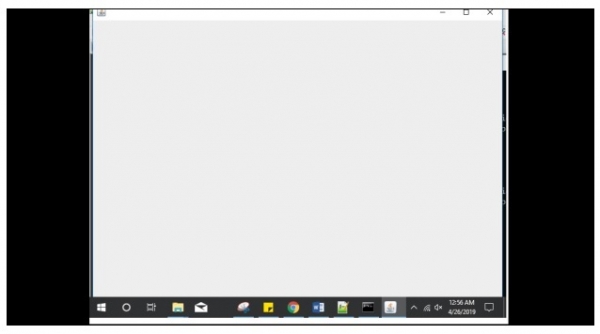
The output is as follows displaying a new display mode. Current mode of the system is 1366x768 and we have set 800x600 for the frame:

Updated on: 2019-07-30T22:30:26+05:30
1K+ Views

Advertisements