
Article Categories
- All Categories
-
 Data Structure
-
 Networking
-
 RDBMS
RDBMS
-
 Operating System
-
 Java
Java
-
 MS Excel
-
 iOS
iOS
-
 HTML
HTML
-
 CSS
CSS
-
 Android
-
 Python
-
 C Programming
-
 C++
C++
-
 C#
C#
-
 MongoDB
-
 MySQL
MySQL
-
 Javascript
-
 PHP
PHP
-
 Economics & Finance
Scalping
Scalping is a high-frequency trading strategy that involves making profits from small price movements in stocks or other financial instruments. Traders who use this technique, known as scalpers, typically hold positions for seconds to minutes, aiming to capture minimal price fluctuations multiple times throughout the day.
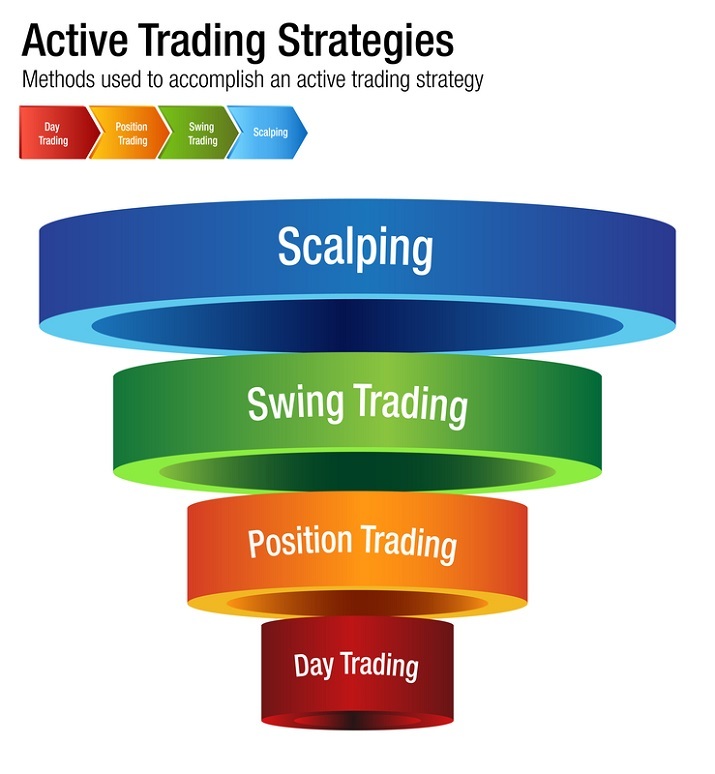
Key Concepts of Scalping
Scalping operates on the principle that small price movements are easier to capture than large ones. The strategy relies heavily on technical analysis and requires traders to execute numerous trades rapidly. Scalpers typically target highly liquid markets where they can enter and exit positions quickly without significant price slippage.
The main goal is to accumulate small profits from many trades rather than waiting for substantial price moves. This approach requires exceptional market timing, quick decision-making, and access to advanced trading platforms with minimal latency.
Example Calculation
Let's examine a practical scalping scenario:
A trader decides to scalp XYZ stock trading at $100.00 per share. They identify a short-term upward momentum and execute the following trades:
- Entry: Buy 1,000 shares at $100.00 = $100,000
- Exit: Sell 1,000 shares at $100.15 = $100,150
- Gross Profit: $100,150 - $100,000 = $150
- Commission: $10 (round trip)
- Net Profit: $150 - $10 = $140
If the trader executes 20 similar trades per day with a 70% success rate:
- Successful trades: 14 × $140 = $1,960
- Losing trades: 6 × (-$140) = -$840
- Daily net profit: $1,960 - $840 = $1,120
Essential Rules for Scalping
- Use stop losses Set predetermined exit points to limit potential losses on each trade
- Trade liquid instruments Focus on securities with high trading volume for easy entry and exit
- Trade during active hours Execute trades when market volume and volatility are highest
- Choose optimal timeframes Use 1-minute to 5-minute charts that match your reaction speed
- Practice consistently Develop muscle memory for quick execution under various market conditions
Factors Affecting Scalping Success
- Market volatility Higher volatility provides more trading opportunities
- Trading costs Commission and spread costs can significantly impact profitability
- Technology infrastructure Fast internet and reliable platforms are crucial for execution speed
- Market liquidity High volume ensures smooth entry and exit without price slippage
- Trader psychology Emotional control and discipline are essential for consistent results
Real-World Applications
Scalping is commonly used in various financial markets:
- Forex markets Currency pairs with tight spreads during major trading sessions
- Stock markets High-volume stocks during market opening and closing hours
- Futures markets Index futures and commodity contracts with high liquidity
- Cryptocurrency Major crypto pairs on exchanges with low fees and high volume
Advantages and Limitations
| Advantages | Limitations |
|---|---|
| Quick profit realization | High stress and time commitment |
| Limited market exposure | Significant transaction costs |
| Frequent trading opportunities | Requires advanced technology |
| Works in various market conditions | Steep learning curve |
Execution Strategy
Successful scalping execution requires traders to identify short-term trends using technical indicators like moving averages, MACD, and stochastic oscillators. Traders set limit orders to buy at predetermined prices and automatically exit when small profit targets are reached. The key is maintaining a favorable risk-to-reward ratio while executing trades with precision and speed.
Conclusion
Scalping is a demanding trading strategy that can be profitable for experienced traders with proper risk management, advanced technology, and deep market knowledge. However, it requires significant time commitment and is not suitable for beginners due to its high-risk nature and technical requirements.
FAQs
Q1. How can scalping be detected in the market?
Scalping can be identified by observing rapid buy and sell orders of large quantities within very short timeframes, typically minutes or seconds. High-frequency trading patterns and minimal holding periods are key indicators.
Q2. Is scalping an efficient trading strategy?
Scalping can be efficient for skilled traders with proper technology and risk management. However, it requires exceptional speed, market knowledge, and emotional control. For beginners, it's not recommended due to its complexity and high-risk nature.
Q3. How can traders improve their scalping skills?
Improvement comes through consistent practice, studying market patterns, using paper trading to develop strategies, investing in quality technology, and gradually increasing position sizes as proficiency develops. Focus on risk management and maintaining detailed trading records for analysis.

425 Views
