
Article Categories
- All Categories
-
 Data Structure
-
 Networking
-
 RDBMS
RDBMS
-
 Operating System
-
 Java
Java
-
 MS Excel
-
 iOS
iOS
-
 HTML
HTML
-
 CSS
CSS
-
 Android
-
 Python
-
 C Programming
-
 C++
C++
-
 C#
C#
-
 MongoDB
-
 MySQL
MySQL
-
 Javascript
-
 PHP
PHP
-
 Economics & Finance
Identifying Entity Relationships in DBMS
Identifying entity relationships in DBMS is used to identify a relationship between strong and weak entity.
Before beginning, let us take an example of Professor entity, which is our Strong Entity, with Professor_ID as a Primary Key −
|
Professor_ID |
Professor_Name |
Professor_City |
Professor_Salary |
The weak entity is Professor_Dependents entity:
|
Name |
DOB |
Relation |
Now, let us continue,
Weak Entity
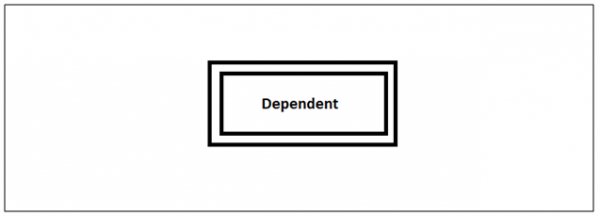
Weak Entity is dependent on Strong Entity and does not have a primary key. Weak Entity has a partial key. It is represented as double rectangle −
Strong Entity
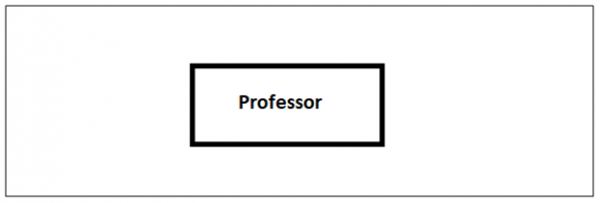
Other entities are dependent on Strong Entity and it has a key attribute i.e. a primary key and represented as a single rectangle.
Identifying Relationships
It links the strong and weak entity and is represented by a double diamond sign.
Let us see with an example to link both the entities using Identifying Relationships:
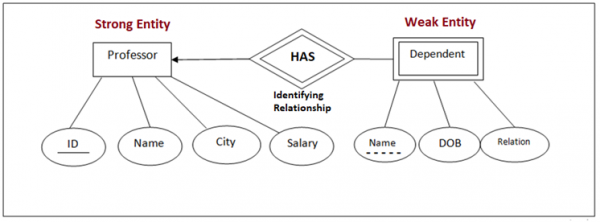
Above we saw that, Dependent Name could not exist on its own but in relationship to a Professor.
Rest, the following we used in our E-R Diagram −
| Professor |
Strong Entity |
| Dependent |
Weak Entity |
| Partial Key (Weak Entity) |
Name |
| Primary Key (Strong Entity) |
ID |

4K+ Views
